
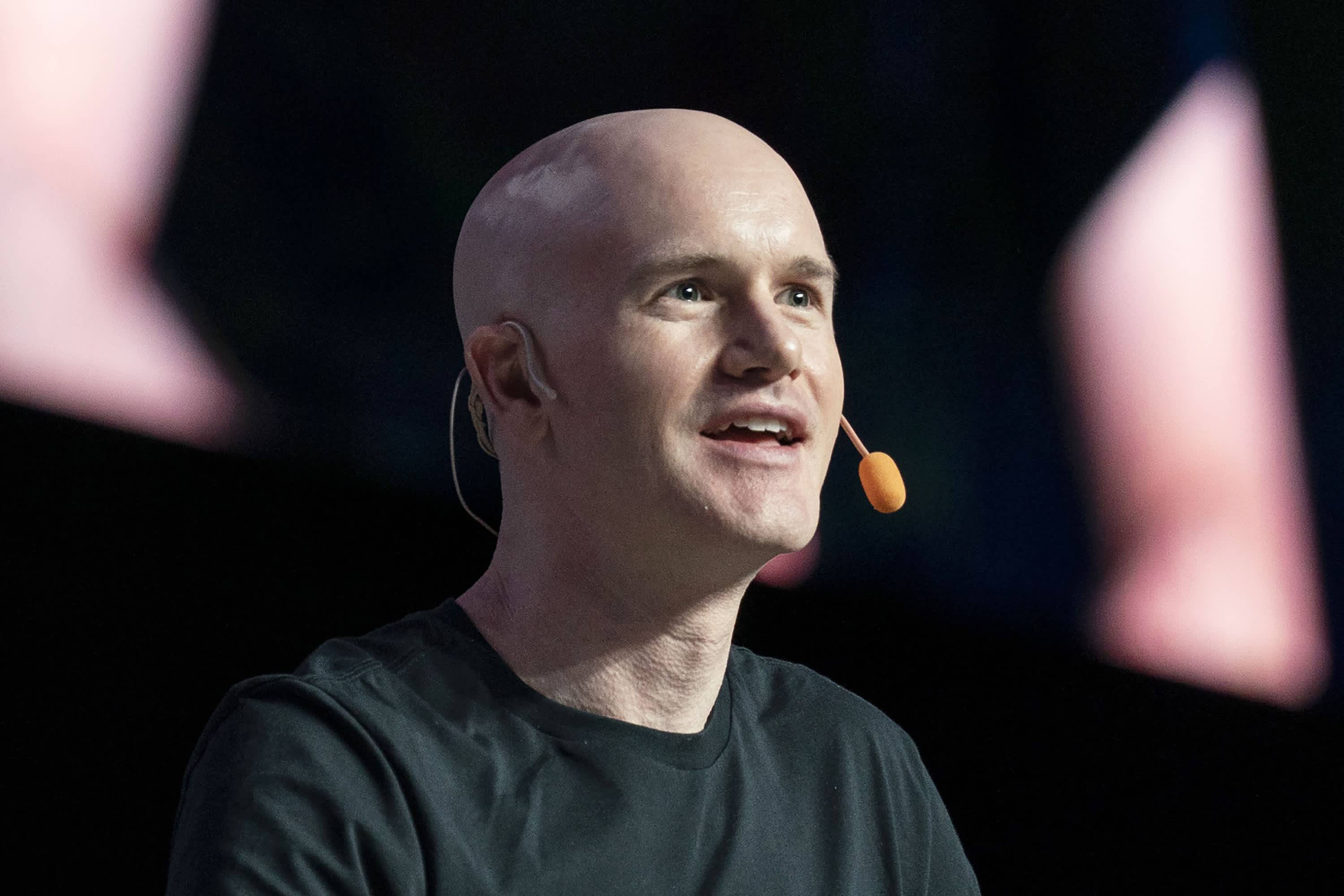
Armstrong described the idea that crypto companies should simply “pivot to AI” as a form of zero-sum, scarcity thinking that underestimates the complementary relationship between the two technologies. In his view, blockchain and artificial intelligence do not need to compete for the same market. Instead, crypto could become an important financial and payment layer for the next generation of AI systems.
Crypto and AI Are Not Competing Technologies
Armstrong compared crypto infrastructure with electricity and the internet. These general-purpose technologies do not compete directly with the applications built on top of them. They provide the underlying infrastructure that allows new products and industries to develop.
The same logic, he argues, applies to blockchain. The growth of AI does not reduce the importance of crypto. Autonomous software may instead create greater demand for programmable money, digital wallets and payment systems that operate continuously across national borders. For Armstrong, the future is therefore not a choice between crypto or AI. It is a combination of crypto and AI.
Why AI Agents May Need Blockchain Payments
As AI agents become more autonomous, they may move beyond answering questions and completing isolated tasks. They could search for information, access APIs, purchase computing resources, use software services and pay other digital systems without requiring human approval at every individual step. Traditional financial infrastructure is not designed for this type of machine-driven activity. An AI agent cannot open a conventional bank account in the same way as a person, repeatedly enter card details or wait several business days for an international bank transfer.
Agents operating at software speed may need payments that can also move at software speed. Blockchain networks and stablecoins can provide programmable settlement that operates around the clock and can be integrated directly into applications.
Coinbase Builds Its Agentic Finance Strategy
Coinbase refers to this emerging model as Agentic Finance, or AiFi: an economy in which autonomous software can directly participate in financial activity. The company is positioning several of its products as infrastructure for this market. These include the Base blockchain, the USDC stablecoin and x402, an open payment protocol that allows websites, APIs and applications to request payments directly through the HTTP standard.
With x402, an AI agent can request access to a digital service, receive payment instructions, send a stablecoin payment and obtain the requested content or API response without creating a conventional account or manually entering payment information.
Linux Foundation Launches the x402 Foundation
On July 14, the Linux Foundation announced the operational launch of the x402 Foundation after Coinbase contributed the protocol to a neutral, openly governed organization. The foundation launched with 40 members from the payments, cloud computing, blockchain and financial-services industries. Participants include Coinbase, AWS, American Express, Visa, Mastercard, Stripe, Circle, Google, Cloudflare, Shopify, Ripple, the Solana Foundation and the Stellar Development Foundation.
The objective is to develop x402 as an open and interoperable standard for internet-native payments used by AI agents, APIs and automated applications. The governance structure is intended to prevent the protocol from being controlled exclusively by one company or payment provider.
AWS Integrates Payments for AI Agents
Coinbase has also expanded its cooperation with Amazon Web Services.
An integration with AWS CloudFront and AWS Web Application Firewall allows website operators and API providers to accept payments from AI agents through x402. A service can respond to an automated request with an HTTP 402 payment requirement, while Coinbase’s infrastructure verifies the payment before access is granted. Amazon Bedrock AgentCore Payments adds another layer. It allows AI agents to discover paid services, connect to supported wallet infrastructure and complete micropayments within limits established by developers or users.
The system includes session-level spending controls, payment authorization, transaction records and monitoring tools. At launch, it supports x402 payments through wallet infrastructure provided by Coinbase and Stripe.
Coinbase Uses AI Without Abandoning Crypto
Coinbase itself reflects Armstrong’s argument. The company is not abandoning blockchain in order to become an AI business. Instead, it is integrating AI into its existing crypto infrastructure and internal operations. Coinbase says that nearly all of its new software code is now generated with AI assistance and reviewed by people. The company has also redesigned parts of its engineering process around developers supervising AI tools, evaluating their output and applying human judgment where models remain unreliable.
This approach illustrates the distinction Armstrong is trying to make: using AI does not require a crypto company to replace its original business model. AI can be incorporated into development, payments, security and customer services while blockchain remains the underlying financial infrastructure.
Crypto Companies Are Repositioning Around AI
Armstrong’s comments come as AI has become one of the strongest narratives in the technology and investment markets.
Some blockchain projects have changed their names, adjusted token strategies or shifted their focus toward AI data, autonomous agents and computing infrastructure. Crypto mining and infrastructure companies have also redirected part of their capacity toward high-performance computing and AI data centres. A similar expansion is taking place among investment firms. As FORECK.INFO previously reported, Paradigm raised a $1.2 billion fund to expand beyond crypto into AI and robotics.
Not every such transition represents a complete departure from blockchain. In many cases, companies are attempting to combine their existing infrastructure with a market narrative that currently attracts greater investor attention.
The AI Branding Risk
The rush to adopt AI branding resembles earlier technology cycles. During the dot-com boom and the blockchain rally of 2017, companies sometimes added fashionable terms to their names or strategies even when their underlying business models changed very little. Armstrong argues that crypto companies following AI only because of market enthusiasm may be treating the two sectors as rivals when they could instead develop products at their intersection.
His argument also aligns closely with Coinbase’s commercial interests. If autonomous agents increasingly use stablecoins, blockchain networks and internet-native payment protocols, Coinbase could benefit through Base, USDC-related services, developer infrastructure and x402 integrations.
Security Will Be a Major Challenge
The combination of AI and crypto also introduces significant risks. Autonomous agents capable of holding funds or initiating payments must operate under strict controls. A faulty instruction, compromised model, malicious API or manipulated data source could cause an agent to send funds to the wrong destination or purchase an unintended service. Developers will therefore need spending limits, wallet isolation, identity controls, transaction monitoring and clear human approval rules for higher-risk activity.
AI security is becoming especially important as agents gain access to financial systems, software tools and sensitive corporate data. Open standards may improve interoperability, but they must be combined with strong safeguards and transparent auditing.
Conclusion: Brian Armstrong’s argument is that the rise of artificial intelligence does not make blockchain irrelevant. Autonomous AI agents may create new demand for instant, programmable and internet-native payments. Coinbase is building around that thesis through Base, USDC and x402, although the scale of the future agent economy remains uncertain. Crypto companies do not necessarily need to abandon blockchain for AI, but they will need to demonstrate that combining the two technologies produces real usage rather than simply a new marketing narrative.